October 2025 | Resolve
NOTE: This was originally published as part of my newsletter in October 2025. Subscribe to my newsletter to receive the next Om Letter direct to your inbox once a month.
I took a longer break than expected over the Summer (…into Autumn), but it gave me some much-needed time to re-evaluate my teaching, and to work on some bigger projects that are coming to fruition soon. I’m co-hosting one final half-day retreat in November, which you’ll find later on in this email, giving you a taste of things to come in the new year.
Before taking some time off I’d put out a call out on my social media to see if there were any particular questions you’d like answered here in a longer format so we’ll finally delve into them now.

Anonymous asked: “If tantra isn’t about celeb sex romps (quoting you) then what is it actually about?”
_______________________________________________________________
I tend to reserve my many gripes about how yoga is portrayed within Western media for Instagram, so here’s a little bit of context for those of you who’ve managed to avoid social media…
When you ask most people where they first heard the term 'tantra,’ it was probably at some point in the 90’s when Sting and his wife Trudie spent a disproportionate part of that decade on American chat shows talking about the ‘tantric sex’ they practiced at home for hours on end. Unfortunately, much of what people refer to as ‘tantric sex’ originated within Western counter culture movements of the 1960’s and 70’s and should be classed as ‘neo-tantra.’ This movement exoticised and sexualised tantra in a way that has unfortunately become stuck in our collective conscious. It’s equivalent to hearing that Jesus turned water into wine once, and from then on believing all of Christianity to be one big booze fest.
As for defining actual tantra… usually when we’re trying to understand a Sanskrit term, we look at its root words. In this case, there are two roots: tan which means to expand or develop, and tra which is an instrument to save, liberate or redeem ourselves. Before the word was ever used in reference to a set of yogic practices, it had previously been used to refer to the act of weaving fabric which remains a great analogy for ‘real’ tantra.
Tantric philosophy views the world as a tapestry of energies. Without the practices of tantra we tend to understand the world around us in terms of polarities (light vs dark, male vs female, warp vs weft etc). Experiencing the world and ourselves through this lens of separateness is often a source of unhappiness. Tantric practices aim to give us the experience of how these individual strands form part of a whole fabric (known as oneness) so that we can understand ourselves as the weaver, the tapestry and the strands all at once. If you pull one strand, many others are affected. In uniting polar opposites, our own individualism dissolves and is replaced by consciousness. This is what is referred to as enlightenment or awakening, which is where the practices of yoga and tantra hope to lead us.

Anonymous asked: “How would you explain non-dualism to someone? I think I understand it, but can’t really put it into words.”
_______________________________________________________________
I’d say that ‘understanding’ rather than ‘being able to put it into words’ means you’re probably on the right track. I’ll do my best to make sense of it for you, but a little bit of context is useful so that we can build our understanding by comparing different perspectives. Essentially, there are three types of systems within philosophical discourse:
Monism - sometimes referred to as materialism or physicalism. This school of thought believes that our reality only exists in the physical world. Monists rely on neuro-scientific language to explain how the brain works to create our emotions and thoughts, including the thoughts that make us believe in the existence of consciousness.
Dualism - when Descartes said ‘I think, therefore I am’ he essentially summed up the dualistic perspective which has deeply influenced our modern culture in the West. Dualists believe that our reality is always made up of two fundamentally separate parts such as mind and body, spirit and matter, inner and outer worlds, ‘me’ versus ‘everything else.’
Non-dualism - the term originates from the Sanskrit word advaita, meaning ‘not two,’ and points to the understanding that all of life is interconnected. In yoga and somatic practice, non-duality isn’t a concept to be believed in, but a direct experience of unity. These are the moments in which the boundaries between ‘doing’ and ‘being’ dissolve; when we sense ourselves as part of something greater. It’s the quiet awareness that holds everything (joy and grief, movement and stillness, effort and ease) without needing to divide or resist.
I should add that not all forms of yoga are non-dual, and at times the language of yoga is purposefully dualistic. We talk about the body as being separate from the mind, or we isolate the breath so that we can really focus our attention in one place at a time until we’ve built up the capacity to experience ourselves as a non-dual whole.
Anonymous asked: “Why yoga? What does it do for you that other movement doesn't/cannot? For me it's always felt like going through the motions, and a good stretch exercise to try every now and then, but no more than that. I want to understand how it has become your everything.”
_______________________________________________________________
Firstly, I’d be remiss if I didn’t point out that although yoga is the lens through which I contextualise much of my life, it truly cannot (and isn’t trying to) be everything to everyone. I myself have for many years ‘cross-trained’ in Olympic weightlifting, as well as internal martial arts (Qi Gong and Tai Chi), and I’ve dedicated the past five years to becoming a Feldenkrais practitioner.
I’ve never wanted to convince anyone that yoga is the best or most complete movement discipline, and this certainly isn’t the time to start. I do however feel that yoga is particularly good at giving us options to adapt the practice as we age, or when our needs and interests change. This in turn, gives us the possibility of engaging with a form of movement consistently for the long-term which gives us a point of reference throughout our life. I can only speak for myself when I say that my continuous relationship with yoga has been invaluable to me.
I would also add that to think of yoga as a ‘stretch exercise’ is partly where the misunderstandings begin. The postures and movements of yoga are predominantly what is taught in the West and some people are able to connect to the deeper layers of the practice through them, but this is the most superficial experience of yoga. Everything that lies beyond this point is far more interesting - pranayama (breath work), the subtle body, philosophical enquiry and meditation can take us into realms of consciousness that cannot be imagined until they are experienced. However, these deeper layers of the practice are so difficult to reach by design - to protect us from what we are not yet ready for so I wouldn’t advise seeking them out unless they call you in.
You’ll hear from me again next month, and in the meantime if you’d like to share anything about a past or present newsletter that’s intrigued you, please reach out in person or via email. It’s always wonderful to hear your responses.
With love,
OM x

Monthly Mantra
“The universe is only as large as our perception of it. When we cultivate our awareness we are expanding the universe.”
Rick Rubin
October Playlist
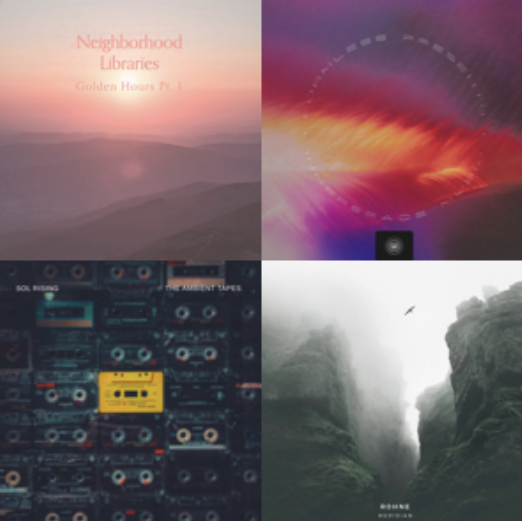
A moody playlist to accompany a warm breakfast tea on an overcast Autumn day

Thank you for reading - if you have any questions please feel free to reach out via email.
Copyright © 2025
Oceana Mariani